


In Part 1 of this series, we explored how Agentic Commerce is already reshaping how consumers discover and order food. But it is not the only transformation underway.
Food delivery platforms are no longer just delivering meals. Today, consumers can use the same app to order groceries, pharmacy products, flowers, pet supplies, household essentials, and much more. What started as a food delivery service is gradually becoming a broader commerce ecosystem. If a platform can deliver a pizza, why not a bottle of shampoo?
Yet the industry's ambitions are no longer limited to adding new product categories. Investment has also expanded into other parts of the customer experience, including restaurant discovery, reservations, loyalty programmes, and enhanced payment experiences.
This shift extends far beyond traditional delivery players. On 15 June 2026, American Express announced the proposed acquisition of TheFork for $700 million, adding one of Europe's largest restaurant discovery and reservation platforms to its growing portfolio of dining assets alongside Resy and Tock.
Taken together, these developments suggest that the industry's future may be shaped by something bigger than delivery itself.
Beyond Meal Delivery: There’s a new home delivery economy
The original food delivery model had a limitation: most consumers do not order takeaway every day. As growth has slowed in mature markets, platforms have looked for new ways to drive engagement and order frequency. Expanding beyond meals helps achieve both.
DoorDash offers a good example. Originally built around restaurant delivery, the platform now enables consumers to order groceries, convenience store products, beauty items, pet supplies, flowers, electronics, and household essentials. In 2025, DoorDash expanded its offering through a partnership with The Home Depot, bringing products from more than 2,000 stores onto the platform and further blurring the lines between food delivery and local commerce.
But expanding beyond meals is only one part of the story, as platforms are also finding new ways to monetise the infrastructure they have built. Through Uber Direct for example, merchants can use Uber's logistics network to fulfil orders placed through their own websites or applications. In the US, Canada, and France, Shopify recently integrated Uber Direct into its checkout experience, allowing merchants to offer same-day and on-demand delivery without building their own delivery operations.
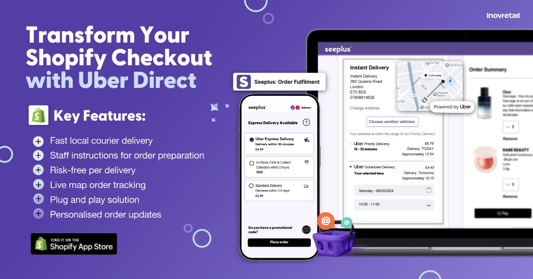
Retailers such as Sephora, a French multinational retailer of personal care and beauty products, have partnered with Uber Direct to offer fast delivery while retaining control of customer relationships, customer data, and payment experiences.
The message is clear. Food delivery platforms want more occasions to engage consumers, while merchants want to retain ownership of the customer relationship.
The real value is the consumer relationship
For food delivery platforms, subscriptions and loyalty programmes still play an important role in that strategy. Their purpose is not simply to reduce delivery fees, but to encourage consumers to engage with a broader ecosystem of services.
India offers an interesting example. Swiggy, one of the country's largest food delivery platforms with 23 million monthly transacting users, has expanded far beyond restaurant delivery into quick commerce, grocery delivery, restaurant reservations, and other local services. Its membership programme, Swiggy One, sits at the centre of that strategy. According to the company, nearly 80% of members use at least two services on the platform and spend three times more than non-members, highlighting the value of bringing multiple consumer journeys into a single ecosystem.
And in 2025, Swiggy went a step further with the launch of One BLCK, a premium membership combining benefits across food delivery, quick commerce, dining, and partner services such as Amazon Prime and Hamleys.
The objective is simple: become the first app consumers open when they want to buy something locally.
Controlling the payment means controlling the relationship
Payments play an important role in this evolution. While subscriptions such as Swiggy One encourage consumers to engage with multiple services within the ecosystem, payments help connect those services together.
In addition to its membership programme, Swiggy partnered with HDFC Bank to launch co-branded credit cards rewarding spending across food delivery, dining, travel, entertainment, and e-commerce platforms such as Amazon, Flipkart, and Nykaa. Rather than being limited to Swiggy transactions, the cards extend Swiggy's presence across a broader share of consumers' everyday spending.
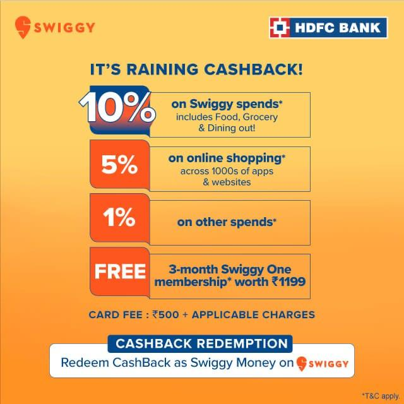
This is what makes payments strategic. Unlike delivery, dining, or retail services, payments sit across every transaction, giving platforms a unique view of consumer behaviour across categories. This can further help personalise the customer experiences, recommend relevant services, and capture a larger share of wallet over time.
The Amex-TheFork deal illustrates where the market is heading
At first glance, the deal has little to do with food delivery. But it raises an interesting question: why would a payment company spend $700 million on a restaurant discovery and reservation platform?
The answer lies in the customer journey. TheFork connects millions of diners with more than 50,000 restaurants across 11 European countries, helping consumers discover restaurants, book tables, receive offers, and increasingly, pay through the platform.
For American Express, this means participating in a larger portion of the dining journey. Rather than interacting with customers only at the point of payment, Amex can engage across discovery, booking, offers, loyalty, and payment.
This investment is another sign that value is increasingly moving upstream. The most valuable position may no longer be at the point of payment, but at the point of decision. Interestingly, like TheFork, which was owned by Tripadvisor before the Amex acquisition, OpenTable, the world’s leading online restaurant reservation platform, is currently owned by Booking.com Holdings and has done since 2014. Could OpenTable be in play? If Booking.com Holdings decides to divest from OpenTable, the future of the platform would pivot sharply toward becoming a tech-first software asset or a strategic weapon in the consumer loyalty wars that we are starting to see play out in the F&B sector.
Coming next
In Part 1, we explored how Agentic Commerce reshapes how consumers discover and order food. In Part 2, we looked at how food delivery platforms are expanding beyond meals to play a larger role across the customer journey.
In the next article of this series, EDC will explore why payments are becoming a strategic part of that evolution. As platforms seek to engage consumers across more services and capture a larger share of spending, payments are evolving from a checkout function into a powerful engagement tool.
Note: By leveraging its proprietary 360° Payments Diagnostic product, EDC helps food delivery, retail, and digital commerce players assess payment performance, reduce checkout friction, and identify opportunities to improve conversion, customer experience, and profitability in AI-driven and automated commerce environments.
The content of this article does not reflect the official opinion of Edgar, Dunn & Company. The information and views expressed in this publication belong solely to the author(s).
Charlotte is a Senior Consultant based in Paris. She holds a master’s degree in management (with a finance specialisation) from Kedge Business School, Marseille. Charlotte gained 7 years of experience working as a finance and strategy specialist in France and in India and worked for some of the largest corporates, including Deloitte, L&T Technology Services in Mumbai, Société Générale Corporate & Investment Banking in France, and India. At EDC, Charlotte works on a variety of client projects, from project kick-off through to strategy conceptualisation, with colleagues in San Francisco, Dubai and London. Charlotte loves skiing and enjoys traveling around South Asia.
%20(1).webp)

%20(1).webp)
.webp)
.webp)


