
.webp)

In Part 1 of this series, we explored how Agentic Commerce could change the way consumers discover and order food. In Part 2, we looked at how food delivery platforms are expanding beyond meals into grocery, retail, reservations, and other everyday services.
But expanding the ecosystem only creates value if consumers actually use it. This is where payments come in. As platforms seek to drive engagement and capture a larger share of consumer spending, payments are taking on a much broader role.
Frictionless payments still matter, perhaps more than ever
Food delivery is a high-frequency, habitual purchase, and switching between platforms costs the consumer almost nothing. Consumers expect the transaction to work immediately, and asking them to re-enter card details, complete unnecessary authentication, or retry a failed payment introduces friction at precisely the wrong moment. While a seamless payment experience may seem like a basic requirement, payment friction can have consequences beyond losing a single order, from interrupting a subscription to pushing consumers towards another platform.
For example, Uber consolidated the checkout logic that each of its lines of business previously ran separately into a single orchestration layer, Unified Checkout. After rolling it Uber observed a 3% higher checkout conversion rate and a 4.5% higher session recovery rate compared with its legacy experience, with users encountering fewer errors and recovering from them more often. While the experiment was conducted on a single line of business, Uber estimated that extrapolating the impact across its overall order placement traffic could represent hundreds of millions of dollars in incremental Gross Bookings annually. The uplift came from infrastructure rather than interface: fewer failed transactions and better recovery from the ones that did fail, rather than a redesigned checkout screen.
The importance of payment performance will only grow as ordering journeys evolve. As explored in Part 1, in an Agentic Commerce environment, an AI agent encountering a failed transaction could select another platform without the consumer ever seeing the checkout page.
As food delivery platforms expand into broader commerce ecosystems, payments can go beyond removing friction and become part of the customer value proposition.
The next step is making payments rewarding
Uber One provides a good example of how payments and rewards can connect spending across different services.
Uber is now extending this model beyond its core services. In April 2026, the company announced hotel bookings through Expedia, with Uber One members in the US earning 10% back in credits on eligible bookings. A customer can book a hotel, earn credits, and later use them to order dinner or travel to the airport.
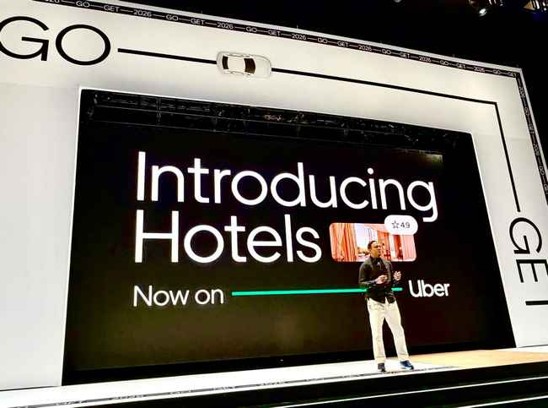
This creates a closed engagement loop: spend -> earn value -> retain value within the ecosystem -> spend again. While frequent users are naturally more likely to subscribe, the model shows how payments and rewards can connect different services and give consumers more reasons to come back.
Payments can connect platforms to broader loyalty ecosystems
Platforms do not necessarily need to build this ecosystem themselves. In May 2026, Wolt partnered with Deutsche Bank and Miles & More in Germany, linking its Wolt+ membership to one of Europe’s largest loyalty programmes. Holders of selected Miles & More credit cards receive Wolt+ benefits at no additional cost and earn double miles on every Wolt order paid with their card.
The partnership connects Wolt to a loyalty programme with more than 39 million members, while Miles & More gains another everyday use case for its payment product. Interestingly, Miles & More itself describes payment as a “key driver” of its programme and a “growth accelerator”, highlighting the role payments can play in connecting high-frequency everyday purchases with broader loyalty ecosystems.
For food delivery platforms, such partnerships can turn existing payment and loyalty programmes into new acquisition and engagement channels, while offering consumers rewards they already value.
Payments and rewards can also bridge online and offline journeys
The same logic is beginning to move offline. In 2025, DoorDash launched Going Out, bringing restaurant reservations, in-store offers and rewards into the DoorDash app. Customers can earn rewards for repeat visits and credits on restaurant reservations that can be used towards future DoorDash orders. According to DoorDash, customers using Going Out offers receive an average of $9 in value per order, while 80% of customers who had tried the service since February 2025 visited a restaurant they had never previously ordered from.
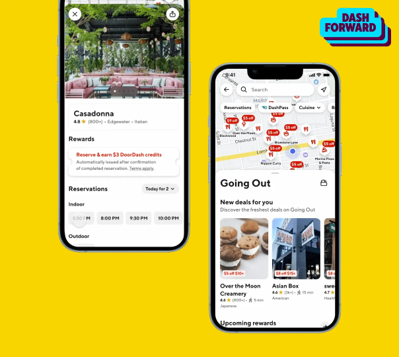
This extends DoorDash’s relationship with consumers beyond delivery. A restaurant visit can now generate value for a future DoorDash order, while the app can influence where consumers choose to dine offline. Payments and rewards can start to bridge the two journeys, creating a loop between online and offline spending.
So what?
Food delivery platforms should start looking beyond traditional payment KPIs such as acceptance rates, cost and checkout conversion. As their ecosystems expand, payment decisions should also be assessed against their ability to drive repeat purchases, cross-service adoption and increasing customer spend.
This does not mean every platform needs its own wallet, card or rewards programme. The starting point should be the customer behaviour the platform wants to influence, whether increasing frequency, encouraging adoption of another service or extending engagement beyond the app, and whether that value is best created directly or through partners.
Food delivery platforms spent the last decade making payments disappear from checkout. The next opportunity is to make them valuable beyond the transaction itself. Ultimately, the most valuable payment may not be the one that completes today’s order, but the one that helps generate tomorrow’s.
Note: By leveraging its proprietary 360° Payments Diagnostic product, EDC helps food delivery, retail, and digital commerce players assess payment performance, reduce checkout friction, and identify opportunities to improve conversion, customer experience, and profitability in AI-driven and automated commerce environments.
The content of this article does not reflect the official opinion of Edgar, Dunn & Company. The information and views expressed in this publication belong solely to the author(s).
Charlotte is a Senior Consultant based in Paris. She holds a master’s degree in management (with a finance specialisation) from Kedge Business School, Marseille. Charlotte gained 7 years of experience working as a finance and strategy specialist in France and in India and worked for some of the largest corporates, including Deloitte, L&T Technology Services in Mumbai, Société Générale Corporate & Investment Banking in France, and India. At EDC, Charlotte works on a variety of client projects, from project kick-off through to strategy conceptualisation, with colleagues in San Francisco, Dubai and London. Charlotte loves skiing and enjoys traveling around South Asia.
%20(1).webp)

%20(1).webp)


.webp)

